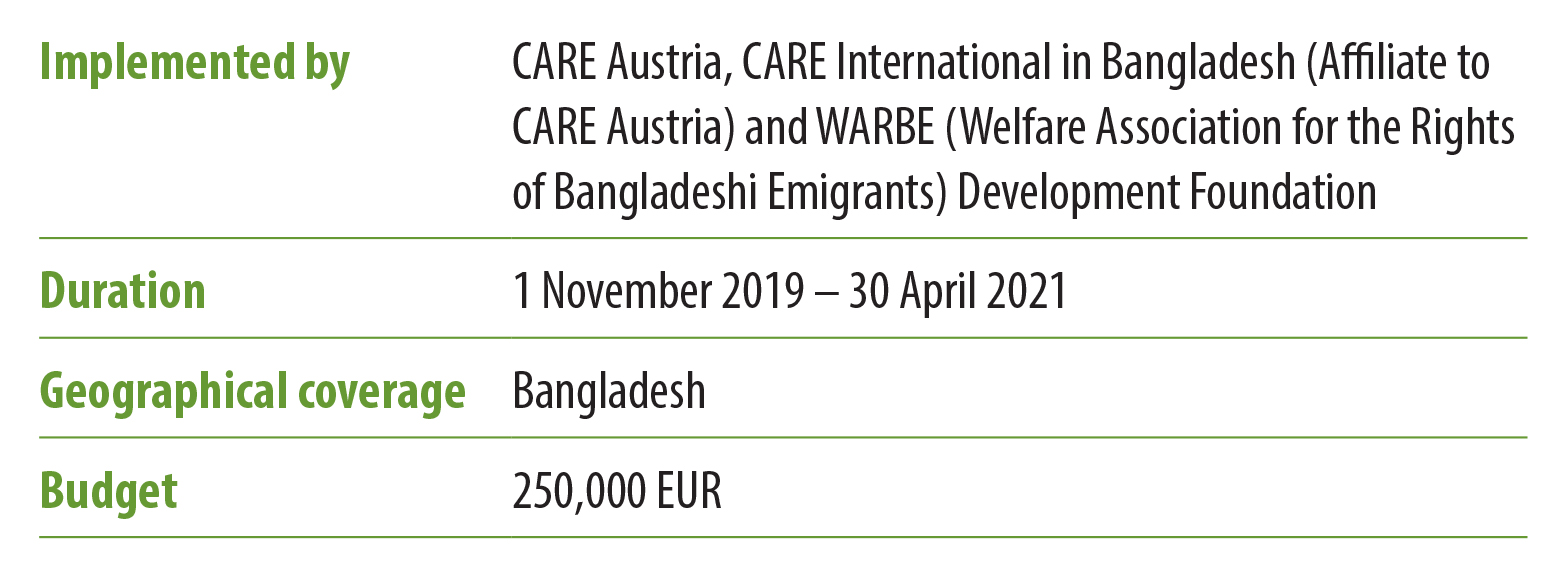
Bangladesh is one of the major labour-sending countries of the Asia-Pacific region. Revenue generated from migration is one of the driving forces of the economic growth. In the recent years, Bangladesh has recorder steady increase of female migration at the rate of 36%, 14% and 17% in 2016, 2017 and 2018 respectively. Poverty, gender discrimination and limited livelihood options in rural areas create a supply of women workers for countries with high demands for migrant workers. South Asia and the Middle East are the main destination points for the female migration, where protection of migrant workers’ rights is not sufficient.
In addition, limited mobility and access to services make women susceptible to exploitation and abuse when they are forced to migrate or willingly choose to migrate. The exploitation and abuse take various forms at different stages as women lack information on safe migration, understanding on rights and entitlements to protect themselves both in country and in destination countries. Due to lesser costs of migration for women compared to men, families often force women to opt for unsafe migration to make a living. The absence of formal recruiting agents and appropriate service provisions in sub-districts combined with low levels of education and skills results in high levels of exploitation of women by middlemen, agents and employers in destination countries. At policy level, a “zero-cost” female migration has been promoted. In reality, due to exploitation at different levels, the costs of migration are high. Due to prevailing social norms, female migration is associated with stigma, which creates a complex set of challenges for women when they return from overseas employment. This makes rebuilding lives after returning from overseas employment difficult.
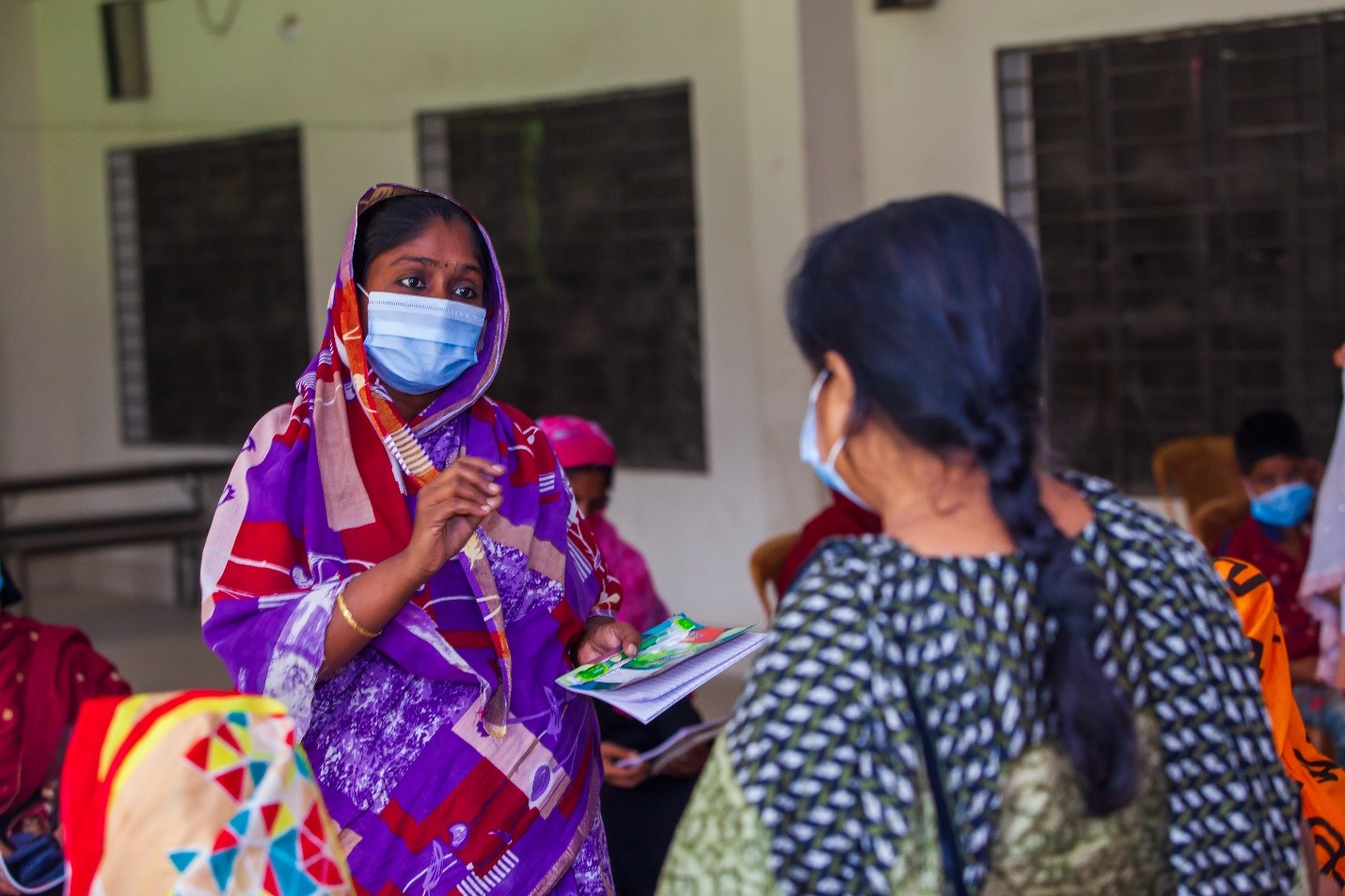
Thus, CARE Bangladesh implements the project with focus on promotion of safe and planned migration particularly for women, in partnership with Welfare Association for the Rights of Bangladeshi Emigrants (WARBE), as a contribution to Sustainable Development Goals 5 and 8. The project ensures that women’s vulnerability and exploitation is reduced throughout the migration cycle by:
- Advocating for gender responsive migration policies, which address women’s particular needs and vulnerabilities, and provide services tailored to women’s needs, especially in cases of sexual and gender based violence, abuse and exploitation.
- Provide pre-departure services and life skills development to reduce risks and vulnerabilities related to migration, and to invest in the development of human capital with a view to enable migrants to harness the benefits of the global job market.
It covers two sub-districts under Dhaka district; namely, Keraniganj and Nawabganj; and employs an evidence based advocacy approach, which should enable policy makers to understand the challenges of migration process from a women’s perspective. The project makes a conscious effort in applying principles of gender equality and human rights in crafting implementation strategies and generating evidence for developing policy solutions to address challenges faced by women.
About the implementing partner:
CARE International is a global humanitarian organization fighting poverty in 90 countries. Women are at the heart of CARE's efforts. In Bangladesh, CARE has been active for over 68 years, with a diverse development portfolio. Until 2017, CARE Bangladesh directly reached 11.4 million people. Today, CARE Bangladesh works in 64 districts through seven field offices - including Dhaka, Khulna and Chittagong. It works with local NGOs, collaborating with them as equal partners and building their capacity to both implement programs and advocate on behalf of program participants.
WARBE-DF has been working on migration since 1999. It has implemented various projects for returnees and aspiring migrant workers, as well as programs on pre-decision and pre-departure orientation and arbitration services to migrant workers who have faced exploitation and abuse during the migration process.