External labour migration has been a livelihood strategy for many Tajiks for more than 15 years and has a major impact on all aspects of the life of the country’s population: economic, social, political and demographic. Almost 30 - 40% of the economically active part of the population seeks foreign employment, thereby reducing unemployment substantially.
Despite the fact that large volume of remittances that were equalled to almost 50% of the GDP for many years, has dropped to 32.5% in 2018, due to the more restrictive labour regulations in the Russian Federation, Tajikistan is still third in the world in terms of remittance inflows (KNOMAD, 2018). Thus, recognising the importance of labour migration, the government of Tajikistan has prioritised it in a number of key national strategies and declarations as well as key legislative acts.
Nevertheless, there is lack of implementation and finances for putting strategies and legislation into effect, where the State Migration Services, an executive authority which implements the state policy in the field of migration, struggles to fully achieve its mandate and reach out to the migrants and their families.
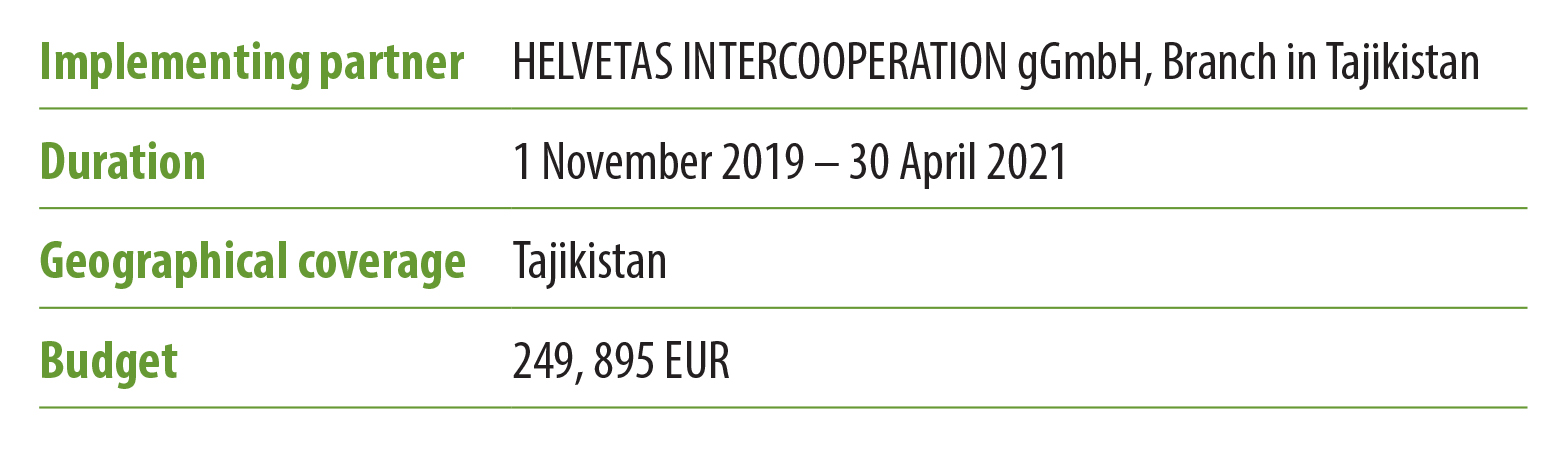
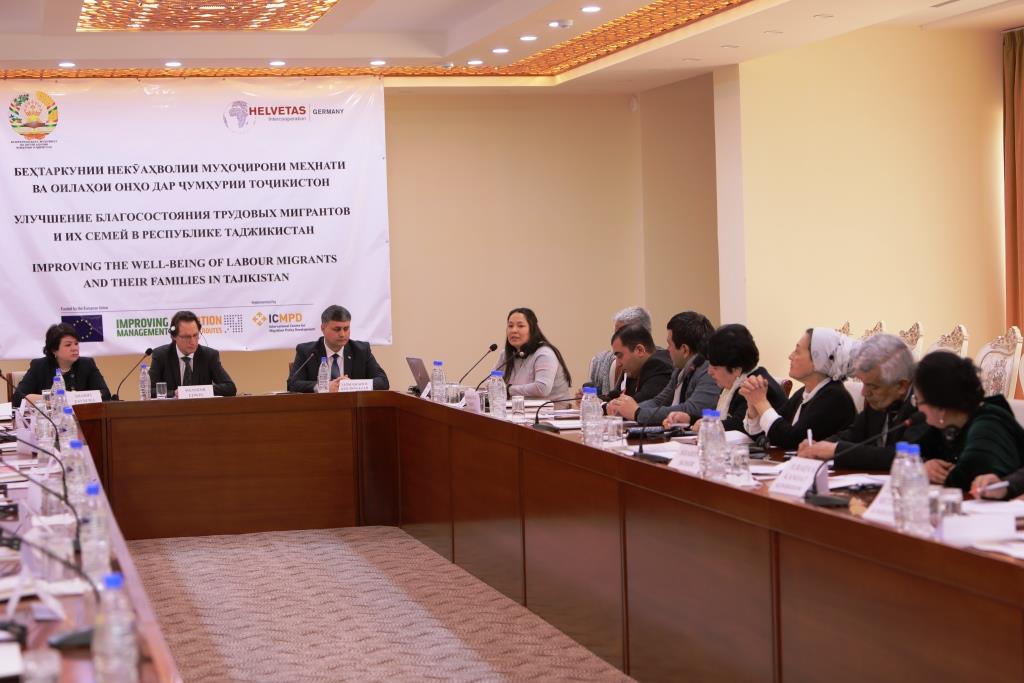
Thus, HELVETAS branch in Tajikistan focuses on the cities of Kanibadam and Isfara, located in the Sughd region of the country, implementing a project that aims to strengthen local self-governance bodies through a number of actions.
The objective of the action is to strengthen access to pre-departure information for prospective labour migrants and their families, to empower them to take an informed decision, and to support families left behind as well as returnees to better manage their financial resources to mitigate the social impact of migration.
About the implementing agency
Helvetas Intercooperation gGmbH, and its branch in Tajikistan that has been working in the country since 2009, with headquarters based in Bonn, Germany, is part of the Helvetas Network, an international network of independent affiliate member organisations working on development cooperation. Helvetas promotes fundamental rights and strengthens governments and other duty bearers in their service provision. The Helvetas network has six decades of development experience, with 1,400 collaborators engaged in 30+ countries.