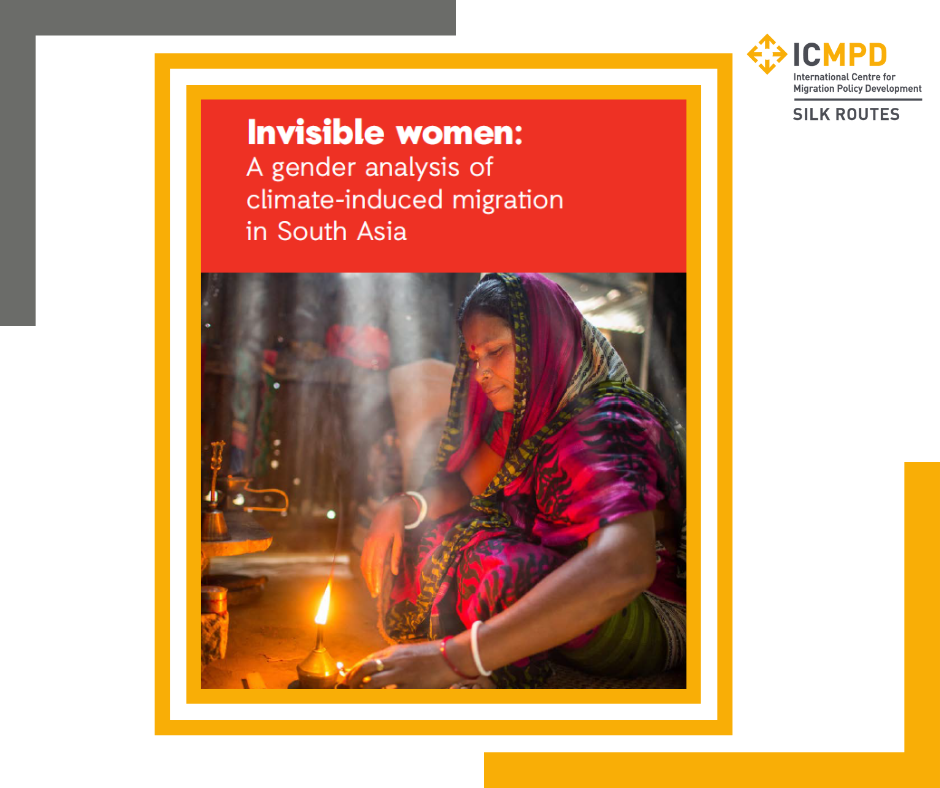
Vienna, Austria: Paying greater attention to women’s voices is critical to understanding the issues that they face. Their views need to be harnessed through gender-transformative policy and programming approaches when it comes to climate change.
The study “Invisible Women: a gender analysis of climate-induced migration in South Asia” presented within the framework of the South Asia Migration and Climate (SAMAC) initiative, funded by EU, highlights the impact of climate-induced migration on women and girls, who are often forgotten in research, policy and media narratives related to this issue.
The report stipulates four areas of gender-specific and strongly interlinked impacts of climate-induced migration that should be better understood and addressed by policymakers, so that communities can adapt and become more resilient. These are impacts on: health and wellbeing; mobility and quality of life; women’s economic rights; and violence against women and girls.
Moreover, earlier studies and recent developments indicate that female voices are needed in climate talks: these need to be brought to the fore and made visible.
Access the full report: https://www.budapestprocess.org/silkroutesfacility/projects-in-the-silk-routes-countries/183-samac
*Report prepared by ActionAid and Climate Action Network South Asia (CANSA) in collaboration with TCRO, AAB and SDPI in Afghanistan, Bangladesh and Pakistan respectively, as part of the South Asia Migration and Climate (SAMAC) project, funded by the European Union through the International Centre for Migration Policy Development (ICMPD) managed project – Improving Migration Management in the Silk Routes Countries.
BBC article: